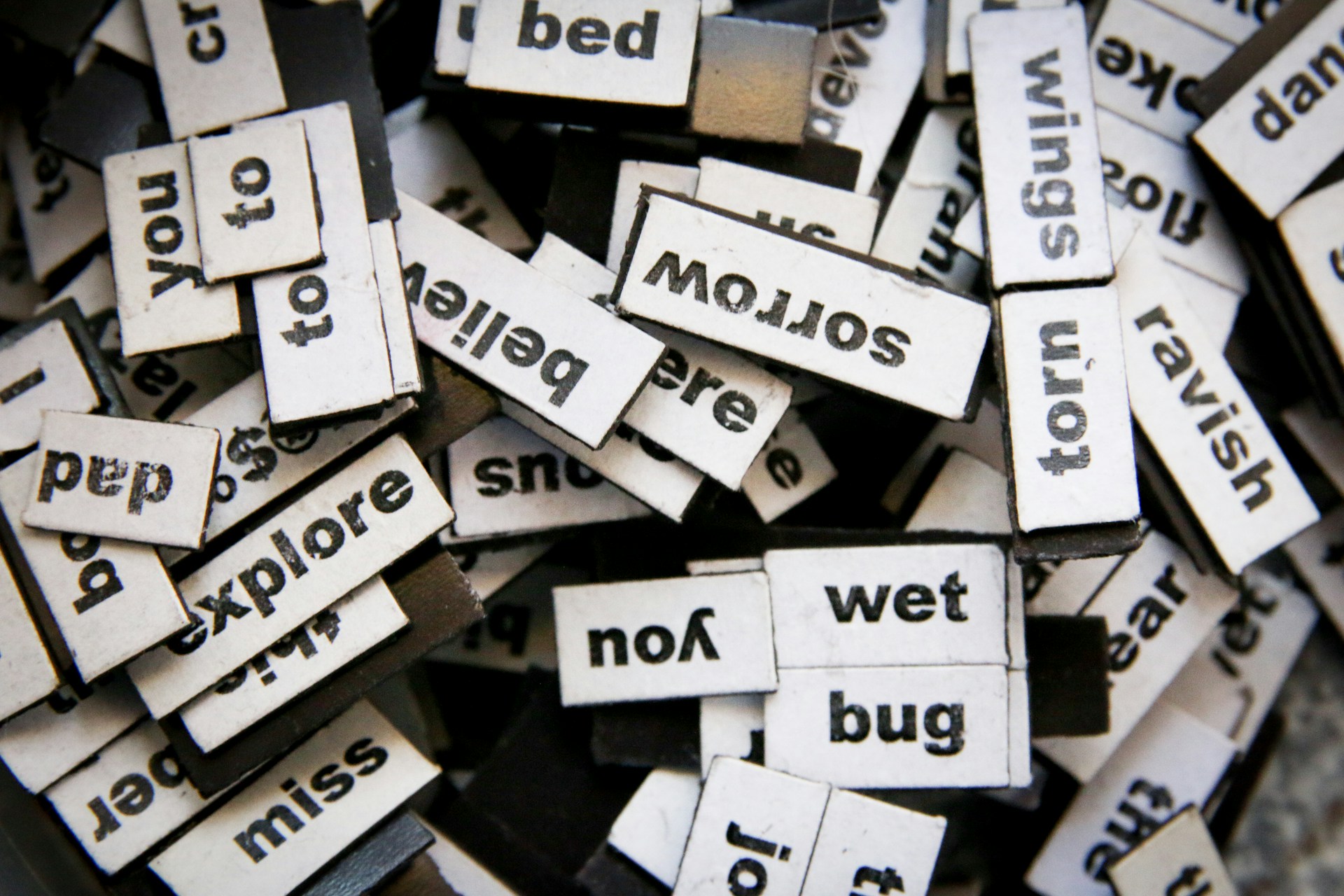
One of my things on my 101 in 1000 days list is to learn new English words. One Hundred to be precise. I have been collecting words I didn’t know for the past year or so – in conversations, books, blog posts, and such. I am honest… I could probably not translate all of them or use them in a real life conversation as of today but I am getting there. Today I am sharing the next 25 words on the list. This time we are looking at character traits, emotions and adjectives. I found this English teacher on YouTube who explains most of the words and it’s really good for understanding. Check him out if you are unsure of a word. Let’s have a look.
- Entreating – German: flehend, bittend – Entreating means acting or speaking in an emotional way to strongly persuade or beg someone to do something. (Word provided by the book „Ministry of time“ by Kaliane Bradley)
- Pugnacious – German: kampflustig, streitsüchtig, kämpferisch – Pugnacious means being eager or quick to argue, quarrel, or fight. (Word provided by the book „The Ministry of Time“ by Kaliane Bradley)
- Dawdling – German: herumtrödeln, träge, bummelig – Dawdling means moving, walking, or doing something very slowly and wasting more time than needed. (Word provided by the book „A Tale for the Time Being“ by Ruth Ozeki)
- Pallid – German: blass, bleich, fahl – pallid: adjective, very pale in an unnatural or unhealthy way, or dull and lacking in energy, excitement, or enthusiasm. (Word provided by the book „The Ministry of Time“ by Kaliane Bradley)
- Lewd – German: anzüglich, unanständig, unzüchtig, unanständig – Lewd is an adjective that describes behavior, speech, or jokes that are crude, offensive, and overtly sexual in an inappropriate way. (Word provided by the book „I who have never known man“ by Jacqueline Harpman)
- Genteel – German: vornehm, manierlich, fein – Genteel is an adjective that means polite, refined, and elegant, often in a way that suggests a high social class or good breeding. (Word provided by the book „Unorthodox“ by Deborah Feldman)
- Gentile – German: nichtjüdisch – Gentile is a word that today usually means someone who is not jewish. Also used as a term to describe non-members of a religious/ethnic group, gentile is sometimes compared to other words used to describe the “outgroup” in other cultures. (Word provided by the book „Unorthodox“ by Deborah Feldman)
- Tawdry – German: kitschig, geschmacklos, niederträchtig, flitterhaft – Tawdry means looking bright and showy, but actually being cheap, low-quality, or in poor taste. It can also describe things that are morally low, shameful, or unpleasant. (Word provided by the book „Unorthodox“ by Deborah Feldman)
- Uppity – German: hochnäsig, dreist – Uppity is an informal adjective used to describe someone who acts arrogant, snobby, or as if they are more important than they really are. (Word provided by the book „The Ministry of Time“ by Kaliane Bradley)
- Acerbic – German: bitter, bissig, sauer, scharf – Acerbic means sharp, biting, or critical in tone, speech, or writing, often combined with a clever or witty edge. (Word provided by the book „The Ministry of Time“ by Kaliane Bradley)
- Farcical – German: absurd, lächerlich, possenhaft, schwankhaft – Farcical is an adjective that describes something so silly, exaggerated, or badly organized that it is completely ridiculous and impossible to take seriously. (Word provided by the book „The Ministry of Time“ by Kaliane Bradley)
- Sedentary – German: sesshaft, ortsgebunden, sitzend – Sedentary is an adjective that describes a lifestyle, job, or habit involving a lot of sitting down and very little physical activity or movement. (Word provided by Melissa in this blog post)
- Impervious – German: unempfindlich, undurchlässig, gleichgültig, undurchdringlich – Impervious means not allowing anything to pass through a physical surface, or being completely unaffected by external influences like criticism or pain. (Word provided by the book „I who have never known man“ by Jacqueline Harpman)
- Salacious – German: anzüglich, schlüpfrig, obszön – Salacious is an adjective that describes something dealing with sexual matters in a way that is lustful, lewd, or unpleasantly full of dirty or scandalous details. (Word provided by the book „The Invisible life of Addie LaRue“ by V.E. Schwab)
- Prurient – German: geil, lasziv, lüstern – Prurient is an adjective that means having or showing an excessive, unwholesome, or curious interest in sexual matters. (Word provided by the book „Ghost Walk“ by Cassandra Gannon)
- Miffed – German: angefressen, verschnupft, leicht angesäuert – Miffed is an informal adjective that means you feel slightly annoyed, offended, or upset by something someone said or did. (Word provided by the book „The Last of the Moon Girls“ by Barbara Davis)
- Self-effacing – German: bescheidend, zurückhaltend, tiefstapeln – Self-effacing means trying not to draw attention to yourself, your abilities, or your achievements. (Word provided by the book „I who have never known man“ by Jacqueline Harpman)
- Taciturn – German: schweigsam, wortkarg, einsilbig – Taciturn means being quiet, reserved, and tending to say very little. (Word provided by the book „Three Apples Fell from the Sky“ by Narine Abgaryan)
- Adroit – German: geschickt, clever, gewandt, scharfer Verstand – Adroit is an adjective that means very skillful, clever, or resourceful, especially in how you use your hands or your mind (Word provided by the book „The Art of Inheriting Secrets“ by Barbara O’Neal)
- Oracular – German:orakelhaft, rätselhaft – Oracular is an adjective that means resembling an oracle—someone or something that speaks with deep wisdom, foretells the future, or gives mysterious and hard-to-understand advice. (Word provided by the book „A Tale for the Time Being“ by Ruth Ozeki)
- Crepuscular – German: dämmerig, dämmerungsaktiv, krepuskular – Crepuscular describes anything related to, resembling, or occurring during twilight. (Word provided by the book „A Tale for the Time Being“ by Ruth Ozeki)
- Duplicitous – German: heuchlerisch, doppelzüngig, scheinheilig – Duplicitous means being deceitful, dishonest, or two-faced by intentionally hiding your true feelings or saying one thing while doing or planning something else. (Word provided by the book „The Last Flight“ by Julie Clark)
- Vapid – German: geistlos, fad, nichtssagend – Vapid is an adjective that means lacking life, spirit, intelligence, or flavor. (Word provided by the book „Gerta“ by Kateřina Tučková)
- Bucolic – German: ländlich, bukolisch – Bucolic is an adjective or noun that relates to the pleasant, peaceful, and idyllic aspects of the countryside, farms, or rural life. (Word provided by the book „The Art of Inheriting Secrets“ by Barbara O’Neal)
- Vernacular – German: volkssprachlich, mundartlich, Dialekt – Vernacular refers to the native, everyday language or dialect spoken by ordinary people in a particular region, country, or social group (Word provided by the book „Stone Witch of Florence“ by Anna Rasche)
Is there a word you have never heard of? Is there a word you use quite regular? Is there a word in this list that I need to adopt immediately in my vocabulary? Is there a word you would never use? What’s your favorite on the list?
This is list #9 in my “Do a 50 lists blog project” from my 101 in 1001 days goal list.

1 comment
I would say that most of these words are not used too often in regular speech. Lewd, sedentary and impervious would probably be the ones I have heard the most in common speech. My Mom is a big fan of words and so always would teach us big words like loquacious and vociferous, but none of my friends would have known what the heck I was talking about (and some may still not know) if I actually used those in a sentence! A word I learned long ago and kind of adopted was copacetic, which means good, satisfactory, on the same page or hunky-dory (also a fun word)! I would use it in a sentence to say that when it comes to deciding on what things to do in Wroclaw, you and I were pretty copacetic!