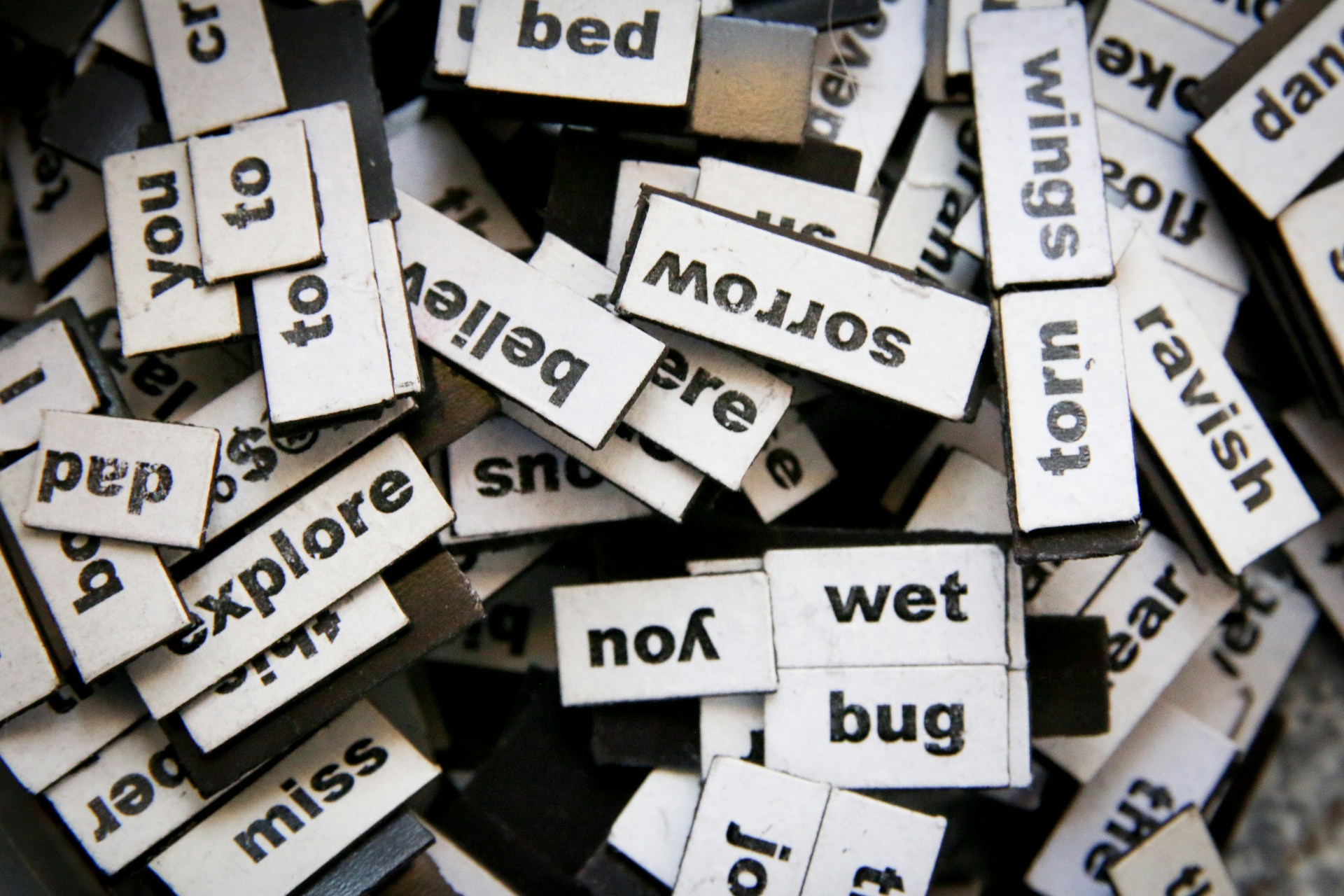
One of my things on my 101 in 1000 days list is to learn 100 new English words. Yes, 100! Ambitious. I know. I have been collecting words I didn’t know for the past year – in conversations, books, blogposts and such. I am honest… I could probably not translate all of them or use them in a real life conversation as of today but I am getting there. Today I am sharing the first 25 words on the list. I tried to sort them a bit so the first 25 will be around nature and maritim life. Let’s dive in.
- Tripe – German: Kutteln – Tripe is a type of edible lining from the stomachs of various farm animals. Most tripe is from cattle and sheep. (Word provided by Kyria)
- Mullet – German: Vokuhila – Mullet is a hairstyle that is short in the front, top, and sides, but long in the back (Word provided by Kyria)
- Skullut – German: no translation – The skullet blends two iconic styles, the popular mullet and buzz cut (or skinhead) to create a hybrid look that’s both revellious and raw. (Word provided by Kyria)
- Jetty – German: Mole, Steg, Pier – A jetty is a man-made structure that protrudes from land out into water. A jetty may serve as a breakwater, as a walkway, or both. (Word provided by Kyria)
- Mere – German: Teich, kleiner See – An archaic or British noun, a mere refers to a shallow lake, pond, or pool of standing water. The phrase “mere water” essentially means a body of water or simple, unadulterated water. (Word provided by the book „The Art of Inheriting Secrets“ by Barbara O’Neal)
- Stevedoring – German: Verladung und Löschung von Schifffracht – Stevedoring is the vital logistical process of loading, unloading, and securing cargo between ships and the shore. It minimizes the time vessels spend in port by utilizing heavy machinery like cranes and forklifts. Stevedoring operations ensure that global supply chains continue to flow efficiently. – (Word provided by my client from the port business)
- Dyke (slang) – German: Lesbe – Dyke is a slang term, used as a noun meaning lesbian. It originated as a homophobic slur for masculine, butch, or androgynous girls or women. (Word provided by Kyria)
- Meat Bee aka Yellowjacket – German: Wespe – Meat bee is a common name for Yellowjackets, which are social wasps, not bees. Members of these genera are known simply as “wasps” in other English-speaking countries. (Word provided by Kyria)
- Skylark – German: Lerche – Skylark refers to a small, brown-speckled songbird native to Eurasia and northern Africa (Alauda arvensis), famous for singing loudly while hovering high in the air. (Word provided by the book „The Art of Inheriting Secrets“ by Barbara O’Neal)
- Osprey – German: Fischadler – The osprey historically known as sea hawk, river hawk, and fish hawk, is a fish-eating bird of prey with a cosmopolitan range. – (Word provided by the book „Laws of Love and Logic“ by Debra Curtis)
- Infamy – German: Schmach, Schande, Unverschämtheit, Infamie – Infamy is notoriety gained from actions considered dangerous, disrespectful, immoral, unethical, or otherwise perceived in a negative manner. (Word provided by Engie in this blog post )
- Susurration – German: Flüstern, Wispern, Murmeln (poetisch) – Susurration is a soft, murmuring, or whispering sound. It typically refers to a low, continuous, and almost inaudible noise, much like the gentle rustling of leaves in a breeze, the lapping of water against a shore, or quiet, indistinct conversation. (Word provided by the book „Book of Doors“ by Gareth Brown )
- Muskeg – German: Torfmoor, Sumpfland – Muskeg is a peat-forming ecosystem found in several northern climates, most commonly in Arctic and boreal areas. Muskeg consists of organic material in various states of decomposition (as peat), ranging from fairly intact sphagnum moss, to sedge peat, to highly decomposed humus. (Word provided by the show Port Protection)
- Peat – German: Torf – Peat is an accumulation of partially decayed vegetation and organic matter, typically found in wet, oxygen-deficient areas like bogs and mires. It is most commonly used as a soil amendment to improve moisture retention or dried and burned as a solid fuel for heating and cooking. (Word provided by the book „Vom Gehen und Bleiben“ by Petra Hucke)
- Estuary – German: Mündung, Meeresarm – An estuary is a partially enclosed coastal body of brackish water where freshwater from rivers or streams meets and mixes with saltwater from the open sea. – (Word provided by the book „Laws of Love and Logic“ by Debra Curtis)
- Dulse – German: Lappentang, Rotalge – Dulse is a nutrient-dense, edible red seaweed (Palmaria palmata) that grows naturally on the rocky coasts of the Atlantic and Pacific oceans. Famous for its salty, savory, and slightly smoky flavor, it is eaten fresh, dried, or fried into a crispy, bacon-like snack. (Word provided by Elisabeth in this blog post)
- Rue – German: Weinraute – Rue is a hardy, evergreen perennial shrub with bluish-green leaves and small yellow flowers. Native to the Mediterranean, it is cultivated globally for its historical medicinal uses, ornamental appeal, and strong scent. (Word provided by the book „The Art of Inheriting Secrets“ by Barbara O’Neal)
- Gillyflower – German: Gartennelke, Landnelke – Gillyflower is a historical English term for any of several fragrant, clove-scented plants. Most commonly, it refers to the carnation. (Word provided by the book „The Art of Inheriting Secrets“ by Barbara O’Neal)
- Rape – German: Raps – The “rape” plant (Brassica napus) is more commonly known as rapeseed or oilseed rape. It is a bright yellow, flowering member of the mustard family (Brassicaceae). It is widely cultivated for its oil-rich seeds, which are primarily used to produce vegetable oil, animal fodder, and biodiesel. (Word provided by the book „The Art of Inheriting Secrets“ by Barbara O’Neal)
- Dogwood – German: Hartriegel, Hornstrauch – Dogwood is a deciduous shrub or small tree belonging to the genus Cornus. Highly prized in landscaping, it is known for its small clusters of flowers surrounded by four large, showy, petal-like leaves (bracts), dense branching, brightly colored winter stems, and hard wood. (Word provided by the book „Laws of Love and Logic“ by Debra Curtis)
- Copse – German: Wäldchen, Hain, Gehölz – A copse is a small thicket of bushes, shrubs, or small trees growing close together. It is often a designated, managed grove and is completely synonymous with the word “coppice”, from which it was originally shortened. (Word provided by the book „The Invisible life of Addie LaRue“ by V.E. Schwab)
- Verbose – German: wortreich, langatmig, weitschweifig – Verbose is an adjective describing speech, writing, or communication that uses more words than are necessary to convey a message. It often implies that the excess words create dullness or confusion. (Word provided by Elisabeth in this blog post)
- Hemlock – German: Schierlingstanne auch Schierling – Hemlocks are medium-sized to large evergreen trees, with a conical to irregular crown. The English-language common name “hemlock” arose from a perceived similarity in the smell of its crushed foliage to that of the unrelated poisonous plant hemlock. – (Word provided by the book „Laws of Love and Logic“ by Debra Curtis)
- Gossamer – German: hauchdünn, zart, Spinnfäden, Gespinnst auch Altweibersommer oder leichte Stoffe – Gossamer is an extremely light, delicate, and sheer substance. It literally refers to the fine, floating cobwebs spun by small spiders, often seen on autumn mornings. Metaphorically, the word is used to describe anything exceptionally airy, flimsy, or translucent, such as a bride’s veil or morning mist. – (Word provided by the book „The Invisible life of Addie LaRue“ by V.E. Schwab)
- Gelid – German: eiskalt, eisig kalt – As an adjective derived from Latin, gelid means extremely cold, icy, or frosty (e.g., “the gelid waters of the Arctic”). Metaphorically, it describes a cold, unemotional, or bitter demeanor. – (Word provided by the book „The Ministry of Time“ by Kaliane Bradley)
And this is it for today the first set of my 100 new English words. My first new word of the new English language I will try to remember, learn and look out for in books and blogposts and such.
Is there a word you have never heard of? Is there a word you use quite regular? Is there a word in this list that I need to adopt immediately in my vocabulary? Is there a word you would never use?
This is list #6 in my “Do a 50 lists blog project” from my 101 in 1001 days goal list.
Photo courtesy: Glen Carrie auf Unsplash


14 comments
This was so fun to read! I had never heard of dulse, muskeg, meat bee, or skullet before, so thank you for enriching my vocabulary.
Oh that is fun that you found some new words in here. Language is such a mystery and exciting.
I guess meat bee is a bit or a regional thing because for Kyria it was this word and a few states up north where I spend a year this was not a thing.
A couple of those words were new to me and I’m a native English speaker. I had to laugh at Mullet, we have a cute little way of describing it “business up front and party in the back”. I will admit to having some cute pictures of my son when he was a toddler with a blond mullet. Gelid, dulse, gillyflower, susurration, and muskeg were all new to me. Mere isn’t a new word to me, but the definition is. Thank you for sharing this with us, I’m always happy to learn something new and you gave me a few new words.
I am happy one word brought you back some fun memories. I guess it was just what you did in the 80’s right. However the haircut is coming back in Germany and there are quite a few hipsters sporting it. Let’s just say it doesn’t grow on me.
I would have assumed gillyflower is something you had heard.
As for mere I came across many times but never looked it up until the book mentioned the name Rosemere was because of the mere. And that made me wonder so I looked it up.
I love this! The words I didn’t know were skullet, meat bee, dulse, muskeg, stevedoring, susseration, gelid, or rue. I’m looking forward to learning more of your 100 words!
Yeah for new words. It is so interesting that meat bee really seems to be a local thing.
I like the sound of susurration. The sound of the word almost tells you what it means.
I’ve never heard the term Muskeg, but when I lived in Alaska there were some animals, kind of like really shaggy buffalo, called Musk Oxen. They live in the tundra, so it makes absolute sense.
When I used to drive to visit my Grandma, a bit over an hour from here, I would drive through farmland, where they amend the soil with peat. There are signs to not throw cigarette buts out of your car window, because it is flammable.
What a great list, and fun for native English speakers to read, and see which words we might be surprised to learn that you hadn’t heard before, and which we had never heard ourselves.
Oh thank you for this comment. And your story about Alaska.
I assume some words are very local as it is in any language. But interesting that muskeg is the one you weren’t familiar with. I did get it from the Alaskan show.
I did not know gelig or muskeg. I also hadn’t heard of mere referring to a lake. There are a few words there that I would never use because I probably wouldn’t be referring to subject matter that would require them. I tend not to use a massive vocabularly anyway.
I bet it makes sense that gelid is a word not native to an Australian. HA. This is the thing. Many words can be understood from context and therefore one just vaguely knows. But for me there are a few words that keep coming up and so I made an effort to look into them. But I agree… I probably never have the urgency to use muskeg. And mere is very poetic and no one would understand.
Several of these words are new to me including stevedoring and gelid. Susurration is a beautiful word/concept I will investigate. And I must start using gelid! I’ve never heard the term meat bee, that’s an odd one. Fun exploration and I love that you included the German translation.
Meet bee seems to be a discussion point. Must be such a local term. Maybe Kyria can explain at one point.
I love the concept of susurration too. That was a whimsical find. It sounds so poetic and magical.
Gelid is also a great find.
That is a great project, Tobia. You’d think having lived in the US for so many years now, I would know all the words… but NOPE. I have heard of some of them, but the only one I regularly use is “estuary” (because it’s part of my science language. I work on rivers + estuaries!)
Ha that is so cool that I looked up a word from your work context. And that you use it regularly.
There are quite a few I probably won’t use on a regular basis at all – since I rarely speak. And in my writing it’s hard to add in muskeg, estuaries or susurration.